For decades, medical admissions in India have largely revolved around a single question:
Can a student score high marks in a competitive examination?
The National Eligibility cum Entrance Test (NEET) has undoubtedly standardized medical admissions and created a transparent merit-based system. However, as healthcare becomes increasingly complex, society must ask a deeper question:
Is academic excellence alone sufficient to identify future doctors?
The answer is increasingly clear. Medicine is not merely a scientific discipline; it is a profession built on trust, responsibility, compassion, and ethical judgment. The physician who treats a patient is entrusted not only with clinical knowledge but also with human lives, emotions, and dignity. As a result, the future of medical education must move beyond selecting rank-holders and toward identifying future healers.
The Missing Dimension in Medical Selection
Academic ability remains essential. Medicine demands rigorous scientific understanding, analytical thinking, and continuous learning. NEET successfully evaluates a candidate's knowledge of biology, chemistry, and physics. However, high examination scores do not necessarily predict qualities such as honesty, empathy, humility, teamwork, or resilience.
Patients do not trust doctors simply because they achieved high marks at age seventeen. They trust them because they demonstrate competence combined with conscience. They expect doctors to tell the truth, admit uncertainty, listen carefully, respect diverse backgrounds, and place patient welfare above personal interests.
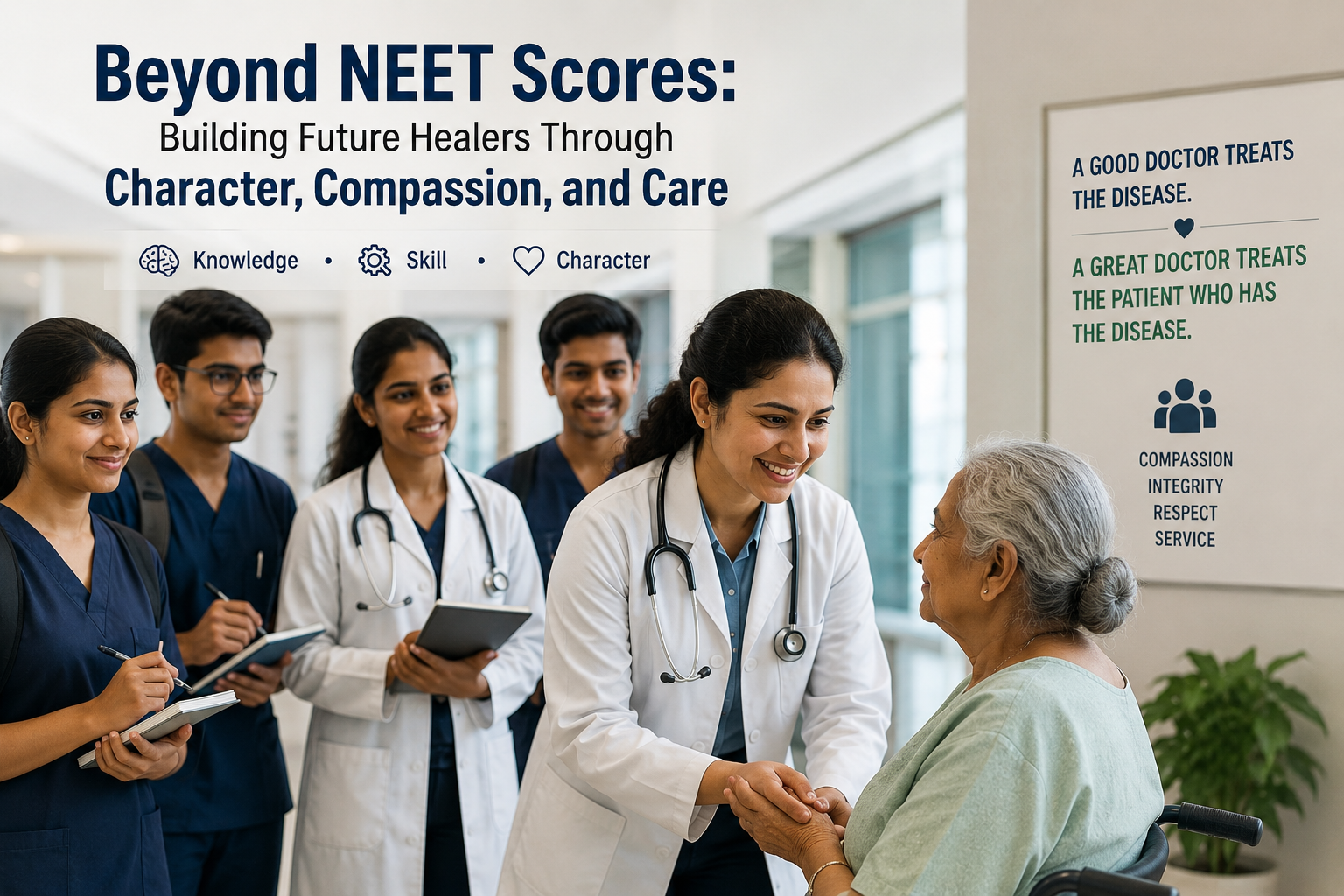
An ideal medical admission system should therefore evaluate three fundamental domains:
- Knowledge – Can the student learn medicine?
- Reasoning – Can the student think critically and solve problems?
- Character – Can the student be trusted with patients?
While current admission systems focus heavily on the first domain, future reforms should gradually incorporate the second and third.
Character: The Foundation of Medical Practice
Character is not built in a single examination. It develops over years through habits, experiences, mentorship, self-reflection, and disciplined practice. Yet admissions can begin identifying candidates who demonstrate the values necessary for the profession.
Several core virtues are particularly important in medicine:
Truthfulness
Medicine depends on honesty. Accurate diagnosis, informed consent, documentation, research integrity, and communication with patients all require truthfulness. A candidate who cheats in examinations or falsifies records raises concerns about suitability for a profession founded on trust.
Compassion
Compassion goes beyond kindness. It involves understanding a patient's suffering, family concerns, financial limitations, and social circumstances. Compassionate doctors see not only diseases but also people.
Humility
Medicine constantly reminds practitioners that uncertainty exists. Humility enables doctors to seek help, accept correction, and recognize limitations. It prevents dangerous overconfidence and encourages lifelong learning.
Responsibility
Healthcare professionals must take ownership of patient outcomes. Missed reports, delayed treatments, and overlooked symptoms can have serious consequences. Responsible practitioners follow through, remain accountable, and prioritize patient safety.
Courage
Doctors frequently encounter situations requiring moral courage—disclosing errors, challenging unsafe practices, resisting commercial pressures, and advocating for vulnerable patients.
Justice
Healthcare should serve all individuals regardless of wealth, geography, language, gender, or social status. Future doctors must understand health equity and the importance of caring for underserved populations.
Perseverance and Equanimity
Medical training is demanding and emotionally challenging. Future physicians need resilience, discipline, and the ability to function effectively under pressure, uncertainty, and stress.
Rethinking How We Assess Future Doctors
Incorporating character into medical admissions must be done carefully. Poorly designed assessments risk introducing bias, subjectivity, and coaching advantages. Any reform must remain transparent, evidence-based, and fair.
Several internationally recognized approaches offer promising possibilities.
Situational Judgement Tests (SJTs)
SJTs present realistic professional dilemmas and ask candidates to choose the most appropriate response. These assessments can evaluate integrity, empathy, teamwork, responsibility, confidentiality, and professionalism.
For example, how should a candidate respond when a friend requests help during an examination? What should be done when a nurse raises a safety concern about a medication dose? Such scenarios assess judgment rather than memorized knowledge.
Multiple Mini Interviews (MMIs)
Unlike traditional interviews, MMIs use structured stations to evaluate specific competencies such as communication, ethical reasoning, empathy, and problem-solving.
Candidates may be asked to interact with a simulated patient's relative, discuss a confidentiality dilemma, or respond to a scenario involving medical uncertainty. Standardized scoring and multiple evaluators help reduce bias.
Reflective Writing
Short supervised reflections can provide insights into ethical reasoning, self-awareness, and patient-centered thinking. Rather than testing literary skills, these exercises evaluate sincerity, professionalism, and moral understanding.
Contextual Merit
Achievement should be viewed within context. A student who succeeds despite rural schooling, socioeconomic hardship, or educational disadvantage may demonstrate exceptional perseverance and responsibility. Recognizing context can make admissions more equitable and socially responsive.
A Balanced Future for NEET
Reforming NEET does not mean abandoning academic merit. Scientific knowledge must remain central to medical education. Instead, the goal is to deepen the concept of merit.
A phased approach could begin with retaining academic performance as the dominant component while gradually introducing assessments of reasoning and professional readiness. Pilot programs, validation studies, multilingual implementation, bias monitoring, and independent audits would be essential before large-scale adoption.
A future admission model might combine:
- Academic science performance
- Scientific reasoning and comprehension
- Situational judgment testing
- Structured interviews
- Reflective assessment
- Contextual achievement indicators
Such a system would evaluate not only what students know but also how they think, communicate, and behave.
Selection Is Only the Beginning
Even the most thoughtful admission process cannot guarantee outstanding doctors. Character must be cultivated throughout medical education.
Medical colleges play a critical role in shaping future professionals through mentorship, bedside teaching, ethical discussions, community engagement, professionalism training, and supportive learning environments. Students learn not only from textbooks but also from observing the behaviour of senior clinicians and institutional culture.
A healthcare system that values compassion, teamwork, humility, and accountability must model those values consistently.
Caring for Those Who Care
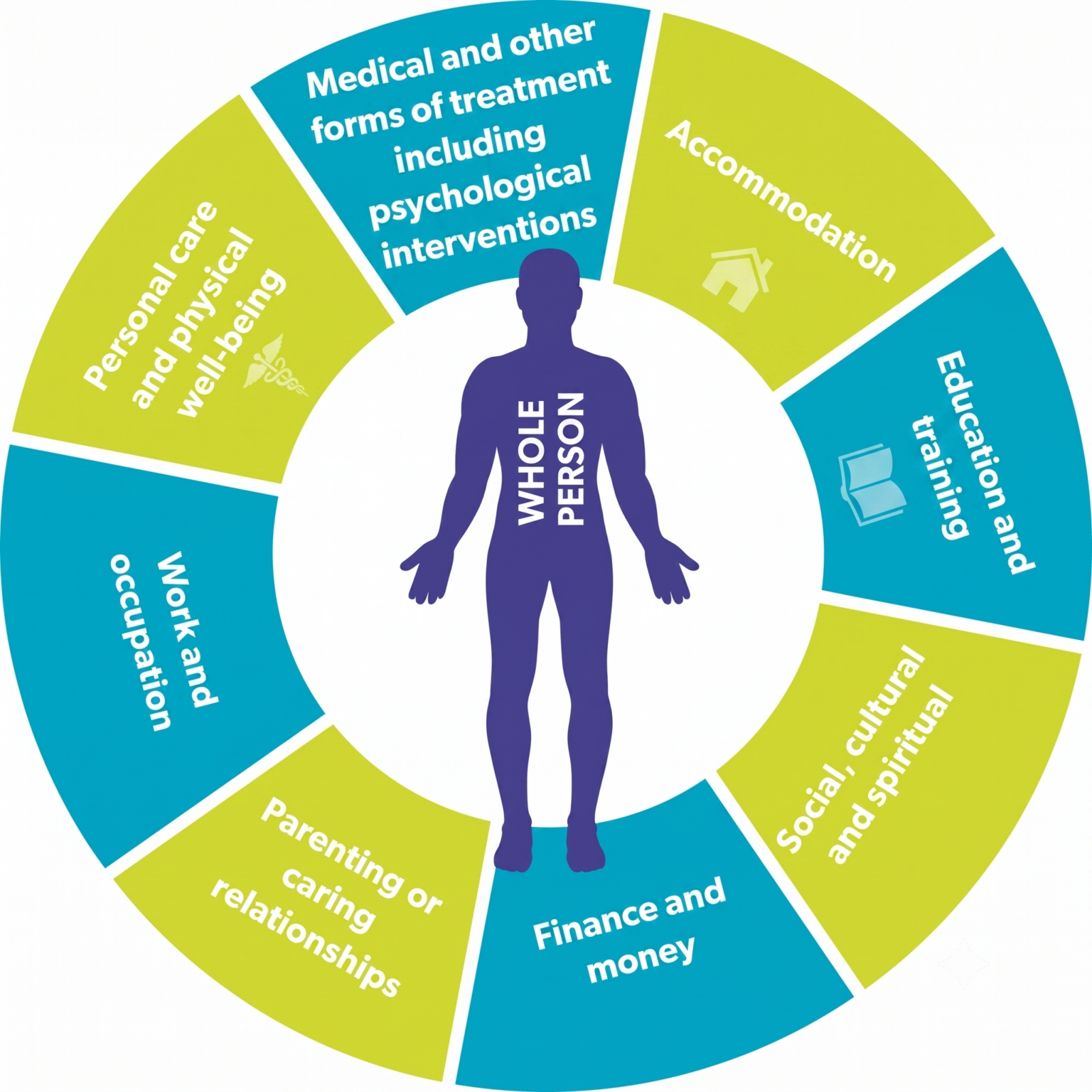
An equally important insight is that healthcare professionals themselves require support. Medical students, residents, nurses, and doctors face enormous academic, emotional, physical, and financial pressures.
Burnout, fatigue, mental health challenges, and workplace stress affect not only caregivers but also patient safety and healthcare quality. Institutions must therefore invest in physical health, emotional support, mentorship, psychological safety, fair working conditions, and professional development.
The quality of patient care ultimately depends on the well-being of those who provide it.
The Path Forward
India stands at an important moment in the evolution of medical education. The objective is not to replace merit but to redefine it more comprehensively.
The question should no longer be simply, "Can this student score?"
Instead, medical admissions should ask:
- Can this person learn?
- Can this person think critically?
- Can this person listen?
- Can this person tell the truth?
- Can this person work in a team?
- Can this person handle uncertainty?
- Can this person serve patients with compassion and integrity?
The future of healthcare depends on selecting individuals who possess not only knowledge but also character.
True medical merit is more than marks alone. It is the combination of knowledge, judgment, professionalism, resilience, compassion, and trustworthiness. By embracing this broader vision, India can move from selecting successful examinees to nurturing the next generation of healers.
Excellent perspective. True medical excellence comes from both competence and compassion. Well written and inspiring.